Omarchy made computers fun again
There’s a feeling you had the first time computers were exciting. Maybe it was your first Linux install, your first custom setup, the first time a machine did exactly what you told it and felt like yours. Then years passed, the tools got corporate, the magic got sanded down, and the computer became an appliance — a thing you use, not a thing you love.
Omarchy gave me that feeling back. All of it. And I want to tell you about it without a single hedge, because for once a thing deserves the full-throated version.
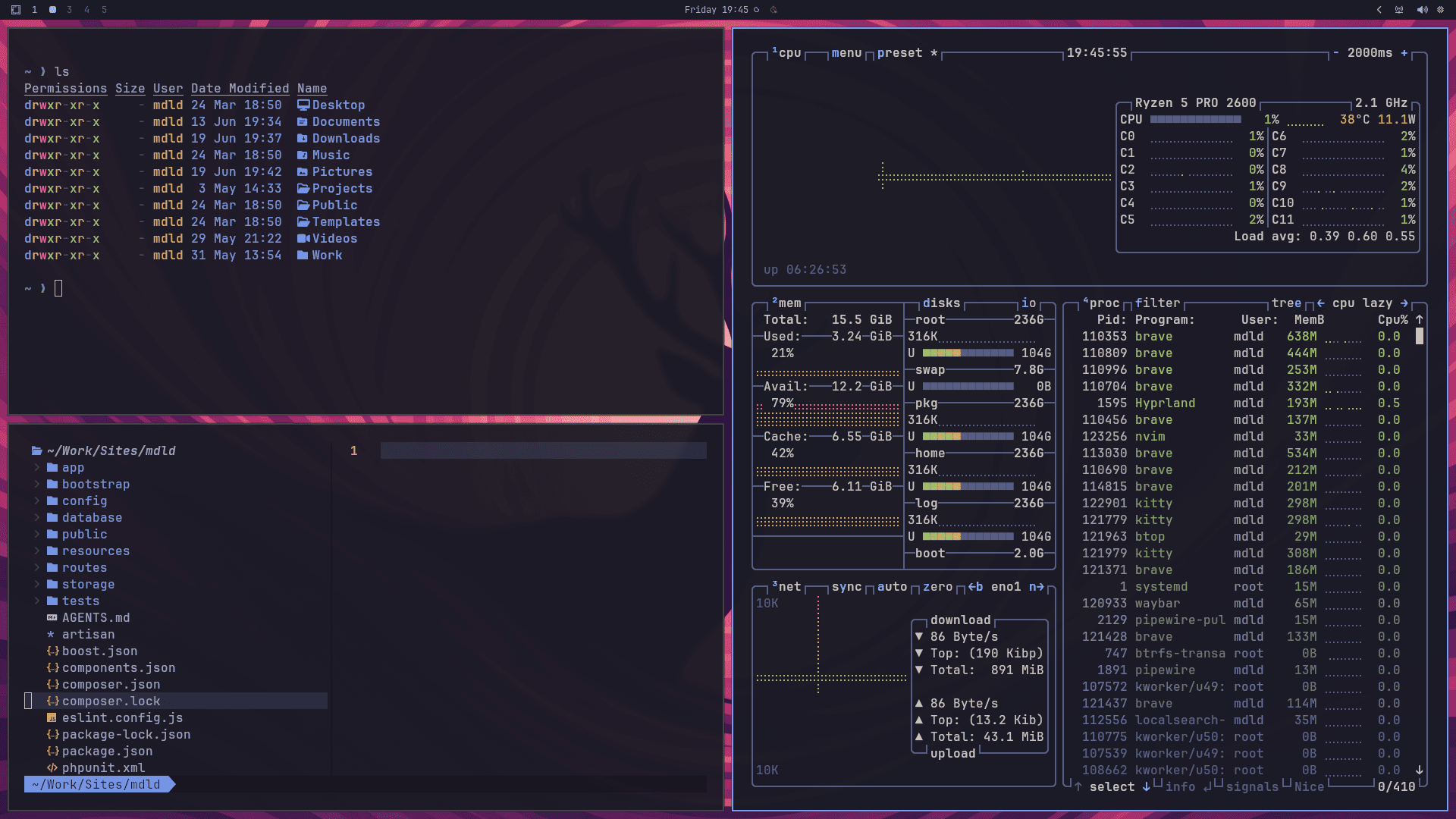
Start with how it looks, because it hits you immediately and it doesn’t let up. Omarchy is beautiful. Not “nice for Linux” beautiful — beautiful in a way that makes you stop and stare. Every theme is coherent, considered, deliberate, the colors flowing through the Alacritty terminal and the Neovim editor and the Waybar status bar like someone actually cared how the whole thing felt together. And switching themes is instant — Omarchy ships with nineteen of them, and one keystroke reskins the entire system at once: terminal, editor, status bar, notifications, lock screen, all of it moving together. You get to feel like you’re redecorating your whole workshop on a whim. As DHH puts it in the Omarchy manual, a beautiful system is a motivating system — productivity is downstream from motivation. You sit down to work and the screen itself is telling you this is going to be good.
Then you start moving, and the beauty turns out to be the smaller half of the story.
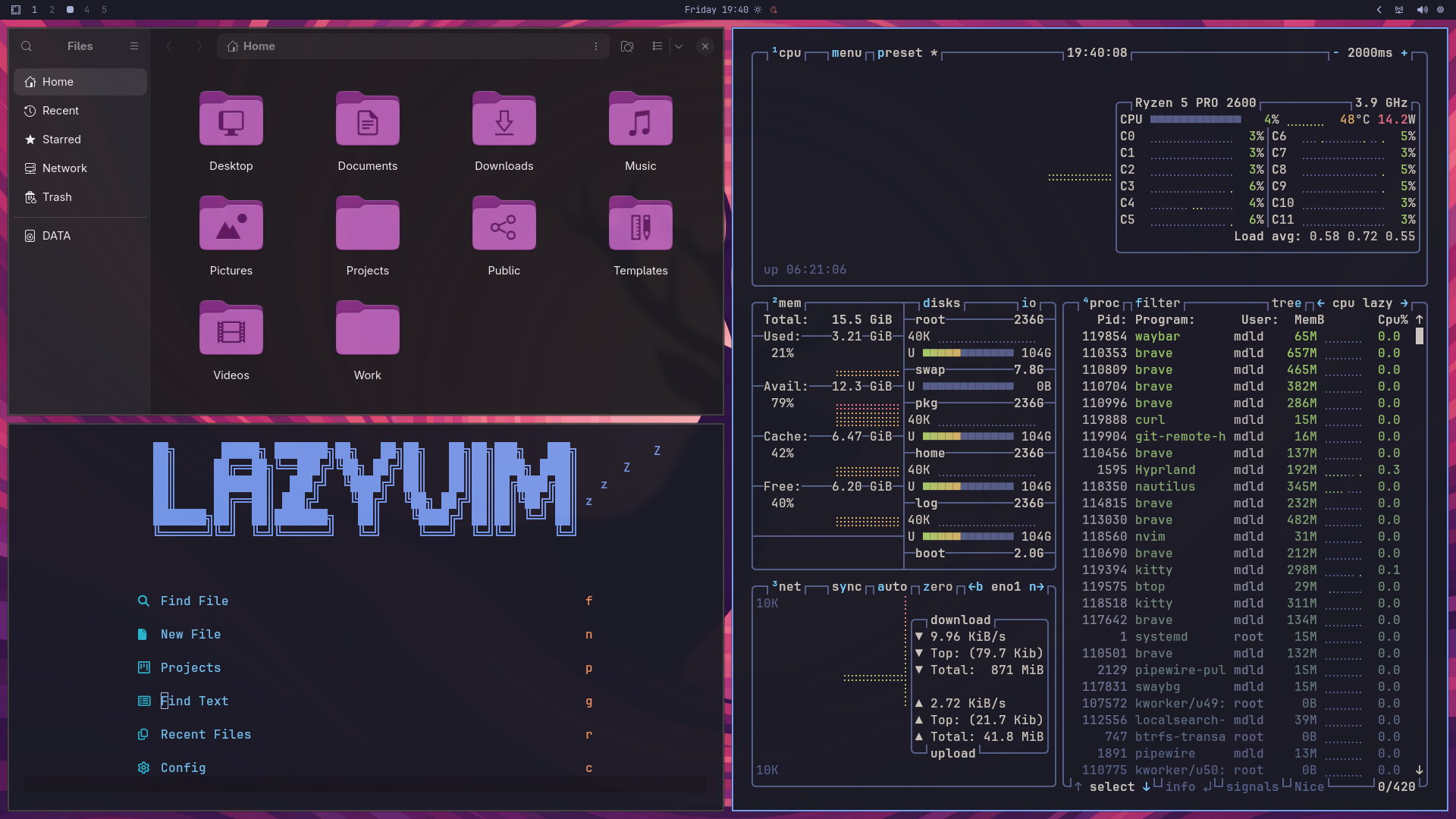
Everything happens through the keyboard. Everything. Open a terminal, throw it to one side, summon a browser, stack them, flip to another workspace, resize, close — your hands never leave home row, never reach for the mouse, never break flow. This is Hyprland, the tiling Wayland compositor Omarchy is built on, and after a few days it stops feeling like commands and starts feeling like thought. You want a window there, and it’s there. The lag between intention and result collapses to nothing. It is genuinely the closest a computer has ever felt to an extension of my own head, and once you’ve felt it, the old point-and-drag world feels like wading through mud.
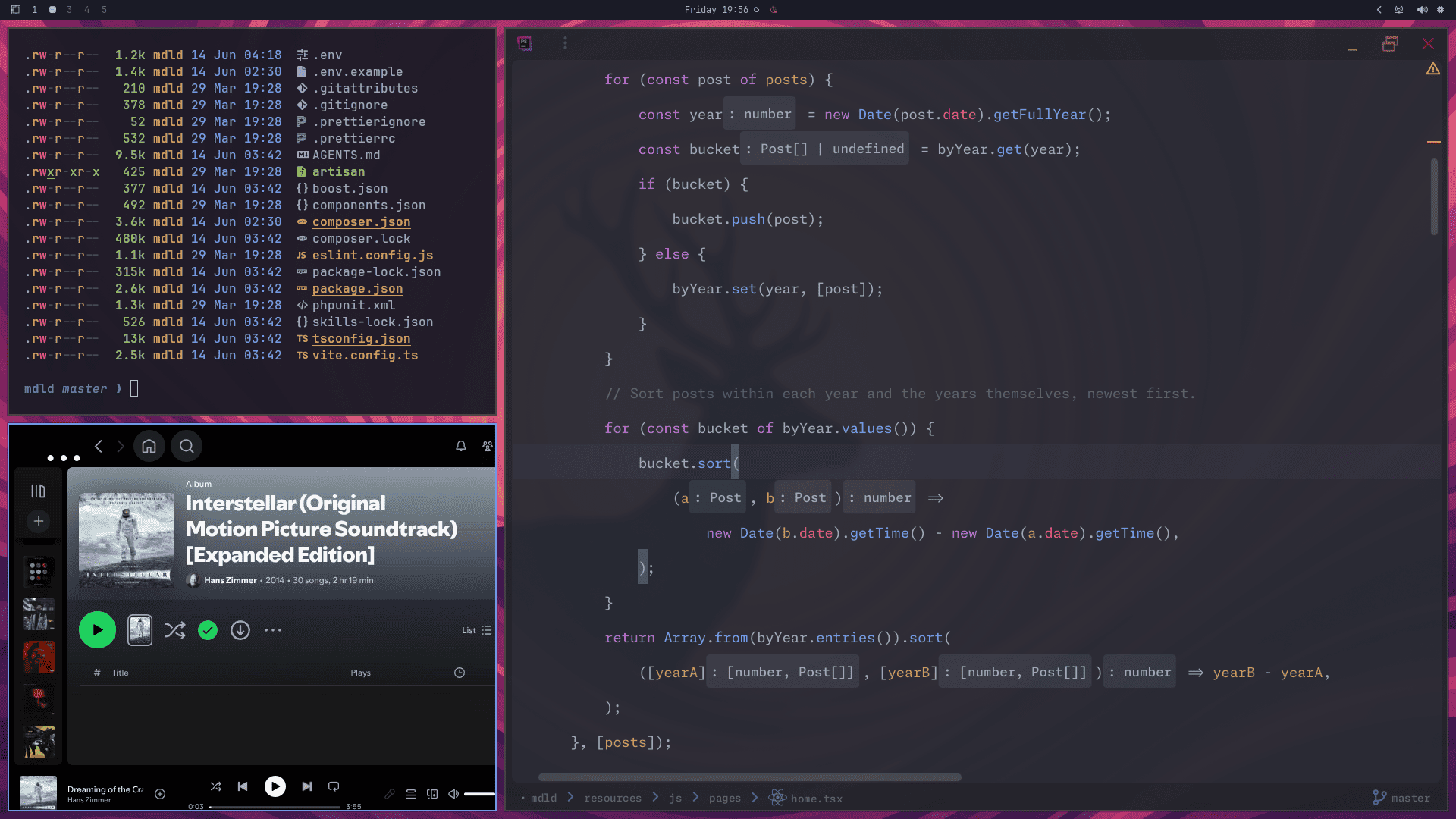
And it’s fast. Brutally, gloriously fast. No spinning, no waiting, no watching a beachball decide your fate. The whole system feels like it’s leaning forward, eager, keeping up with you instead of making you keep up with it. On hardware that other operating systems had given up on, Omarchy flies — people are reviving decade-old laptops with it and running their whole working lives on machines that “should” be in a drawer.
Here’s the part that still amazes me: you get all of this in about a couple minutes. One ISO, a few questions, and you go from nothing to a complete, gorgeous, fully-loaded development machine — editor, terminal, browser, every tool a working developer needs, themed and tuned and ready. No weekend lost to config files. No forty browser tabs of “how do I make Hyprland do X.” Someone who has done this ten thousand times did the hard part for you, and handed you the result. The most painful onramp in computing — building Arch from scratch — turned into the most delightful one in the ecosystem.
And the whole thing runs from one place. Hit the menu — Super + Alt + Space, rendered through the Walker launcher — and you can install a package, switch a theme, update the system, tweak a setting, all without leaving the keyboard.
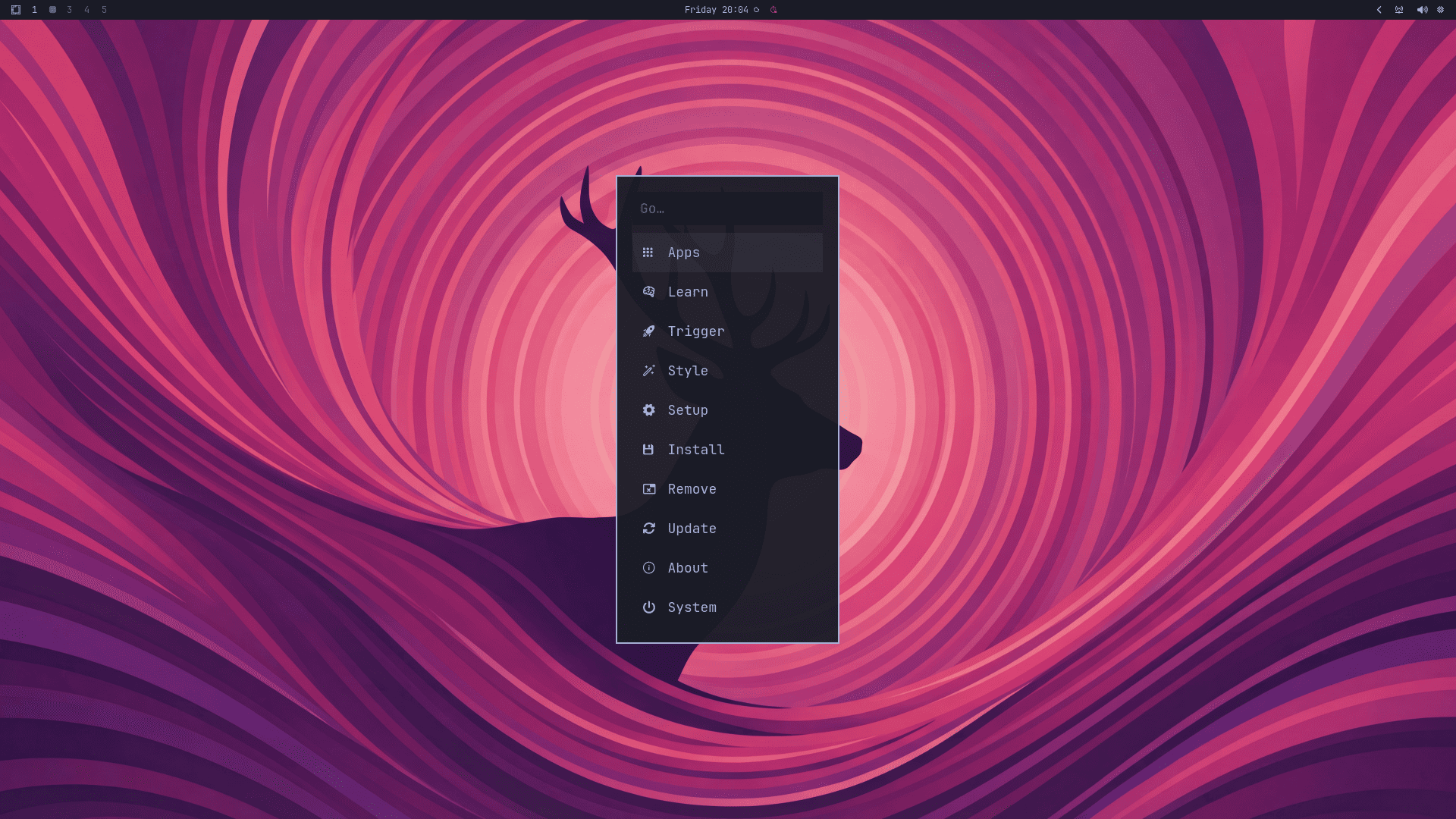
But the thing I didn’t expect, the thing that actually won me, is the joy. Omarchy is fun. It’s playful. It assumes you’re here for a bit of an adventure, that you want your computer to delight you, that beauty and speed and craft are worth caring about for their own sake. It treats the desktop not as a grim productivity surface but as a place you live and work and should enjoy. When was the last time an operating system tried to make you grin? Mine does, daily.
And underneath the fun there’s something almost moving: this whole thing is free, open source, and built in the open by thousands of people who just wanted to make something cool together. No company extracting from you, no telemetry phoning home, no dark patterns nudging you toward someone’s quarterly numbers. Just a community of people who care, building a beautiful thing and giving it away, because making cool stuff with other nerds is its own reward. You can feel that intention in every corner of it. The thing was made with love, and love is contagious.
I know how this sounds. I know the reasonable, balanced take is to list the caveats, to be measured, to note who it’s not for. Other articles can do that. This one is a love letter, and love letters don’t hedge.
Omarchy made my computer feel like mine again — fast, beautiful, joyful, alive. It reminded me that tools can be wonderful and not just functional, that craft still exists, that a machine can spark something instead of just running your tabs. I sit down to work now and I’m a little bit excited, the way I was when this was all new.
If any part of you remembers when computers were fun, do yourself a favor. Grab the ISO, skim the manual, and read DHH’s reasoning if you want the why behind it all.
Wipe a drive. Spend twenty minutes. Fall back in love.
Subscribe to get new posts by email.